
Remembering Rev. Harold Hyunchung Shin (1939–2026)
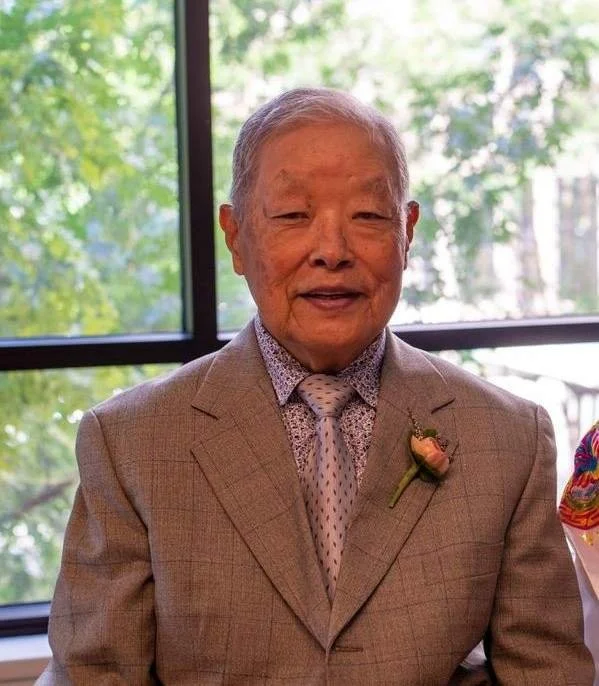
Rev. Harold Hyunchung Shin
I felt deeply saddened when I belatedly learned that Rev. Harold Hyunchung Shin, the founding executive director of Korean American Community Services (KACS), had passed away on May 29, 2026. Danae Kovac, the current executive director of HANA Center, the organization KACS later merged into, also learned of his passing after the funeral and informed me with a copy of the service bulletin. I wasn’t able to do anything that evening; it felt far different from the passing of other community friends and leaders because he taught me the trade of community work and guided my path as a community worker. Under his leadership, every staff person at KACS—regardless of their discipline from social work, business, or other social sciences, to no college degree—became a community social worker in spirit, adhering to one mission: HELP PEOPLE, particularly Korean immigrants. We fondly called him “Chongmunim,” a traditional Korean title for the executive director of a service organization. Following his ordination, we gradually transitioned to calling him “Moksanim,” Reverend.
Rev. Shin was unique among first-generation immigrants. From the very beginning of KACS, he was forward-thinking in adopting the term Korean American as part of its name—while most organizations identified simply as “Korean.” Our new life must be bifocal, he was convinced, in that immigrants must adapt to their host country while honoring the heritage of their homeland. Furthermore, he keenly understood the American approach to building a community organization and expanding its capacity. While some first-generation Korean leaders chased titles like president or chairman, Rev. Shin focused on efficiently implementing programs and diligently writing grant proposals to secure funding from government agencies and private foundations.
With Rev. Shin in command, KACS quietly built its organizational capacity, relocating three times and opening satellite offices to be closer to Korean residential clusters. What began in 1972 with a single half-time staff person—Rev. Shin himself—had grown by the 1980s into an organization of nearly 50 staff members with an annual budget exceeding $1 million. Major community events, such as pianist Paik Kun-Woo’s concerto with the KBS Symphony Orchestra or athletic matches featuring the Korean national women’s volleyball team, were all sponsored by KACS because back then, it was the only Korean organization with the mobilizing capacity to stage such large-scale events. While these events generated modest revenue, Rev. Shin was more committed to bringing these cultural and athletic experiences to Korean immigrants seeking moments of comfort during their arduous journey in America.
I haven’t met another first-generation Korean immigrant who wrote English as well as Rev. Shin. His graduate studies in the United States and his doctorate from McCormick Theological Seminary must have shaped him become a good writer, but he must have also made strenuous efforts back in Korea to become proficient in English writing. Old-fashioned and trained before the computer age, he always wrote with a pencil and a block eraser, from which I could sense his total concentration. Yet later in his life, Rev. Shin became quite adept at social media platforms like Facebook and KakaoTalk. A regret remains that I didn’t thoroughly respond to his messages because I was far less comfortable navigating these digital tools than he was.
His achievements are countless: hundreds of Korean immigrants were placed into jobs every year during the peak of Korean immigration; Korean immigrants received support in applying for U.S. citizenship, adjusting their status to legal permanent residency, and inviting their family members from Korea; senior citizens were offered assistance in applying for public benefits and senior housing, and gained employment opportunities through senior programs; and second-generation Korean children were enrolled in daycare. Regarding physical infrastructure, Rev. Shin purchased the current HANA headquarters at 4300 North California Avenue, and he planned and constructed Moogoong Terrace and Koram Senior Housing in the 1980s. This Korean community-sponsored senior housing development was the first of its kind in the country, so Korean communities in other cities consulted him on their own housing developments.
The mission of KACS was clear from the outset: to help settle newly arriving Korean immigrants, but Rev. Shin was unusually open to inviting non-Korean board members and serving non-Korean clients, at a time when most Korean organizations stayed narrowly focused. He invited white pastors and lawyers onto the board to connect KACS with the mainstream and their professional expertise. When KACS was mediating Black-Korean conflicts in support of Korean merchants, Rev. Shin invited two African American leaders from the Chicago Urban League and Habitat for Humanity Chicago to serve on the KACS board.
True to the spirit of Jane Addams, after whom Rev. Shin’s alma mater was named, he opened KACS’s doors to multiethnic settlement services while the rest of the Korean community remained exclusively focused on Koreans. After the fall of Saigon in 1975, KACS became a hub for Southeast Asian refugees from Vietnam, Cambodia, and Laos into the early 1980s, helping them find jobs and navigate public benefits. Some of those staff members went on to found their own community organizations. As the Latino population grew in the greater Albany Park community, their children began to enroll in the KACS early childhood center, and these Latino families eventually became a major portion of clients across all age groups. When a sizable number of Indian families came to KACS to file for immigration amnesty under President Reagan’s 1986 initiatives and subsequently apply for U.S. citizenship, KACS was humorously referred to as a consulate of India. None of this would have been possible if Rev. Shin hadn’t been willing to grow with a changing environment, forgoing to remain a Korean traditionalist.
As a key bridge to the larger society, Rev. Shin also served on the board of the United Way of Metropolitan Chicago and numerous committees of the Presbytery of Chicago. His membership and involvement in mainstream organizations helped KACS and other Korean community organizations in developing a solid organizational structure and securing major grants. As a pastor, Rev. Shin may have felt somewhat uncomfortable with the nitty-gritty of local politics. However, as executive director, he often had to work with local aldermen to secure city land for senior housing developments and draw their support in funding and administrative matters. Working in coordination with Rev. Shin, these aldermen also went a step further to help arrange factory jobs in their wards for incoming Korean immigrants.
Personally, Rev. Shin wrote a letter of recommendation for my graduate school application. He came to my wedding, and attended the funerals of both my parents. He was always patient with my shortcomings. He hired me on three different occasions—as a job developer, research assistant, and community organizer—and provided me with many opportunities to grow. He took me to important meetings, which he didn’t have to do, to expose me to the bigger picture beyond the Korean community. When our outings stretched into lunchtime, he would take me out to a Korean or Chinese restaurant over seolleongtang or jjamppong, which tasted so delicious to a young man. When I had no car of my own, fresh out of college with no savings, he often let me drive his car to conduct the organization’s affairs.
Despite everything he built from 1972 to 1995, Rev. Shin never dwelt on his accomplishments and simply moved on. To practice this detachment, he often cited a Presbyterian church rule that a former pastor does not attend his old church and also maintains a certain physical distance, and he lived by that same principle of letting go. After retiring from KACS, Rev. Shin embarked on another venture, serving as the founding executive presbyter of the Midwest Hanmi Presbytery. It was perhaps more fitting for him to work in the gospel proper rather than the social gospel. Although I am not as familiar with his work with the Presbytery, I am sure he always reaffirmed as a lifelong social worker that the social gospel is a gospel, too—just a specific expression of it.
His teacher and the president emeritus of the seminary he attended, Rev. Kim Jae Joon (1901–1987)—often known by his sobriquet, Jang Gong, meaning “emptiness afar”—wrote in his personal memoir how deeply impressed he was with his former student during his visit to KACS, describing how neatly organized Rev. Shin was in running the office and growing the organization. Rev. Shin can now report back to his teacher, Rev. Kim, and to their common Master, “I practiced what you taught me, ‘Love your neighbor as yourself.’”
So long, Rev. Shin, we will dearly miss you. It was my privilege to work under you.
Inchul Choi served as the executive director of KACS from 1995 to 2003 and from 2007 to 2017, and he worked a total of seven years on other occasions on Rev. Shin’s staff.